How Much Does Secure File Sharing Cost for a Small Business?
TL;DR
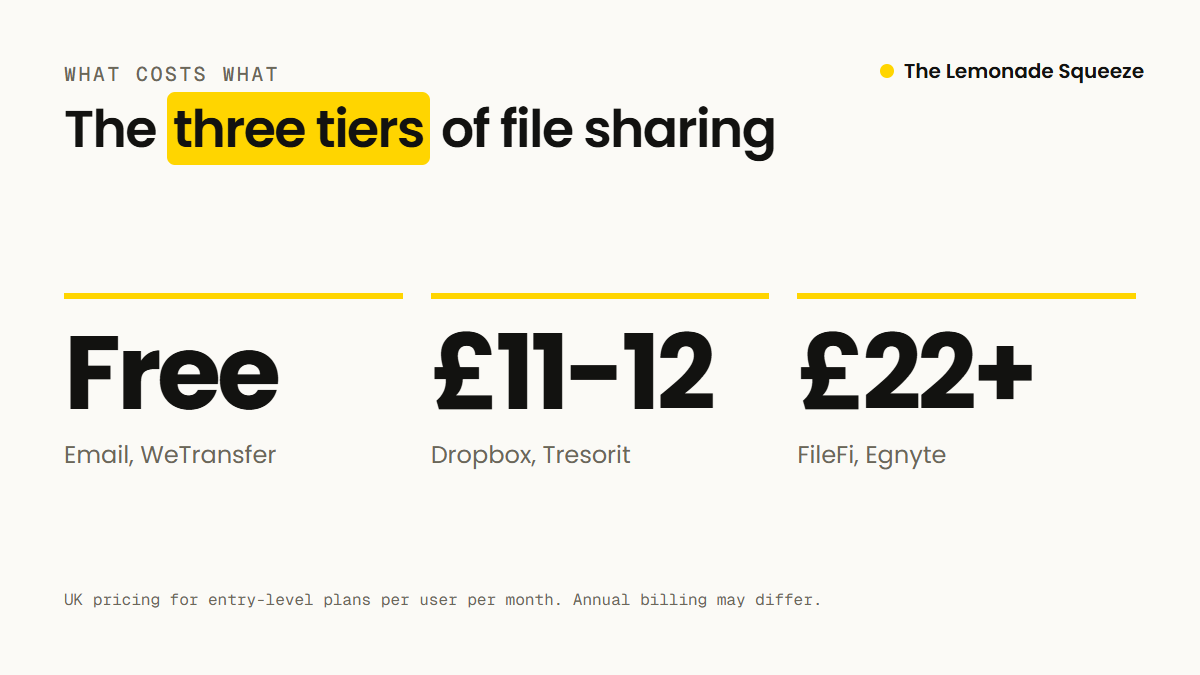
Free tools work for one-off file sends (email, WeTransfer free tier), but lack audit trails, download tracking and size limits.
Entry-level business plans (Dropbox Plus £11.99/month, Tresorit £12/user/month) add collaboration and version history, but share the SME pain points: broad permissions, slow recipient experience, US data storage.
Specialist UK-based options (FileFi £22/user/month) offer download receipts, UK data centres, full audit trails and no size limits, so recurring costs beat the hidden cost of a data breach or compliance issue.
The choice depends on whether your files are client-sensitive or just collaborative. If you're sharing signed agreements, survey data or personal information, premium costs itself.
What You're Really Paying For
When you send a client file through email or WeTransfer free, you pay with security debt. When you buy a plan, you're buying peace of mind: a known location for data, a trail of who accessed it, control over how long it stays shared, and the ability to know if someone actually opened what you sent.
For UK professional services (surveyors, architects, engineers, lawyers, physios), the question is never "cheap or premium". It's "what happens if a file lands in the wrong inbox, and how much notice do you get".
Free and Almost-Free: When They're Fine
Email attachments and WeTransfer free tier (3 GB per transfer, 10 transfers a month, retained for 3 days) work if the files are non-sensitive and you're sending to someone you know. No login needed on the recipient end, no learning curve. They cost you nothing.
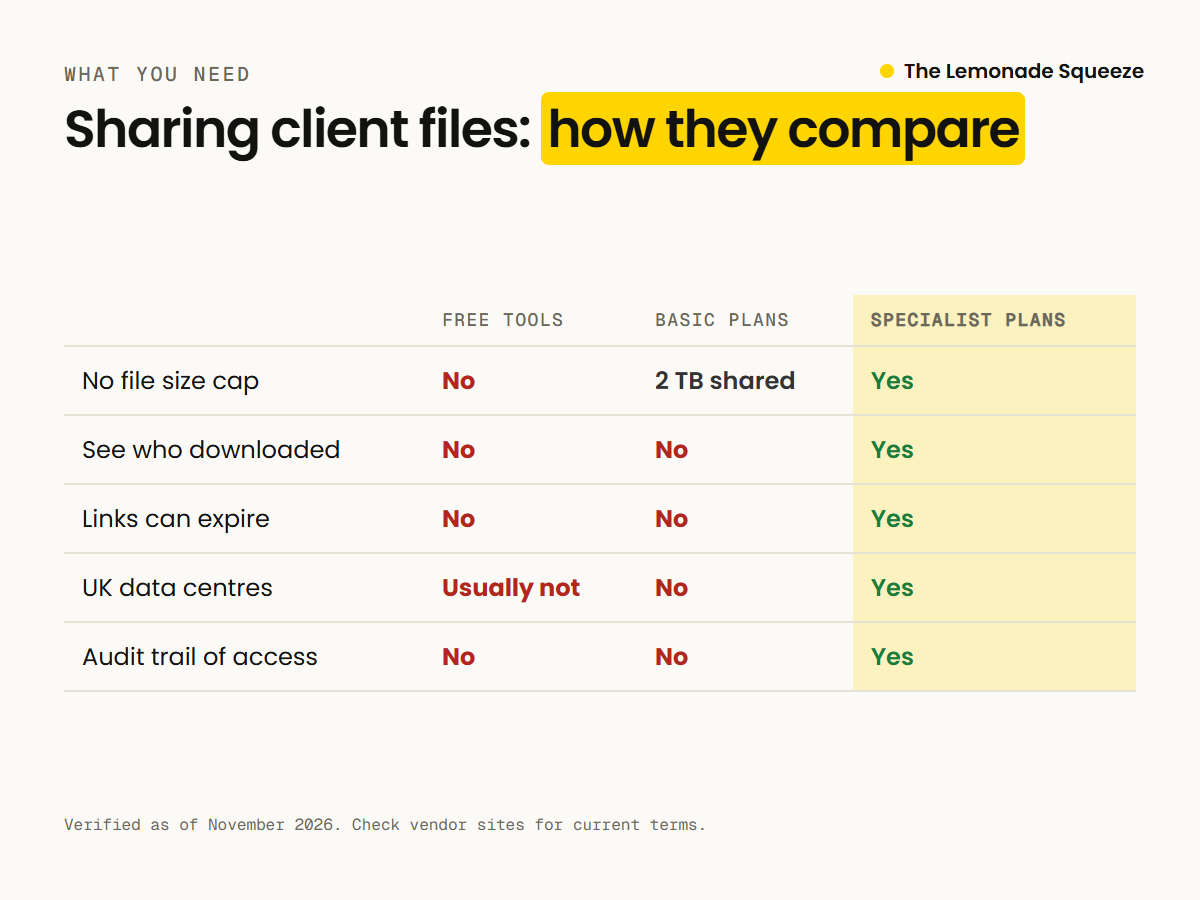
Where they fail: no audit trail (you don't know if it was opened), no expiry control (a recipient can keep the file indefinitely after download), and size limits (most shared designs, surveys or video walkthroughs will blow past 3 GB without trying).
Entry-Level Plans: Collaboration Without Compliance
Dropbox Plus (£11.99/month for 2 TB) and Tresorit (£12/user/month) add shared folders, version history and desktop sync, so a team can work on the same files without email chains. Good for internal work. Worth it if you're burning time on "final-v3-actually-final.xlsx".
But if your files are client-sensitive: Dropbox's broad permission model means a shared folder can become messy fast (everyone gets edit access), and their US data centres sit outside the UK GDPR picture - your data leaves home soil. Neither shows you a download receipt or lets you revoke access after the fact.
Entry plans work for collaboration. They don't work for compliance.
Specialist Plans: Audit and Expiry
Platforms built for professional services (FileFi £22/user/month, Egnyte £22-£48/user/month) give you download receipts, UK data centres, full audit trails, and link expiry. Files don't sit around indefinitely. You know exactly who accessed what and when.
For a surveyor sending a roof plan to a client, an architect sharing a CAD model, or a physio sharing exercise videos—where the file is sensitive and compliance matters—the difference is real. You can prove your files were handled carefully, and you can revoke access instantly if needed.
The payback math: one data breach, one client complaint about "where's my password-protected file", or one audit where you can't prove chain of custody will cost more than a year of subscriptions.
Your Real Cost Isn't the Price Tag
Secure file sharing is one of those decisions where the cheapest option often costs the most. Email is free until you send a contract to the wrong address. WeTransfer is free until you need to prove you sent it. Generic cloud storage is cheap until a former staff member still has access to shared folders.
The question to ask isn't "which one is cheapest". It's "can I prove my files were handled safely". If yes, pick entry-level and save the money. If no, specialist platforms aren't a luxury - they're insurance.