
Why Don't My Happy Customers Leave Google Reviews?
TL;DR
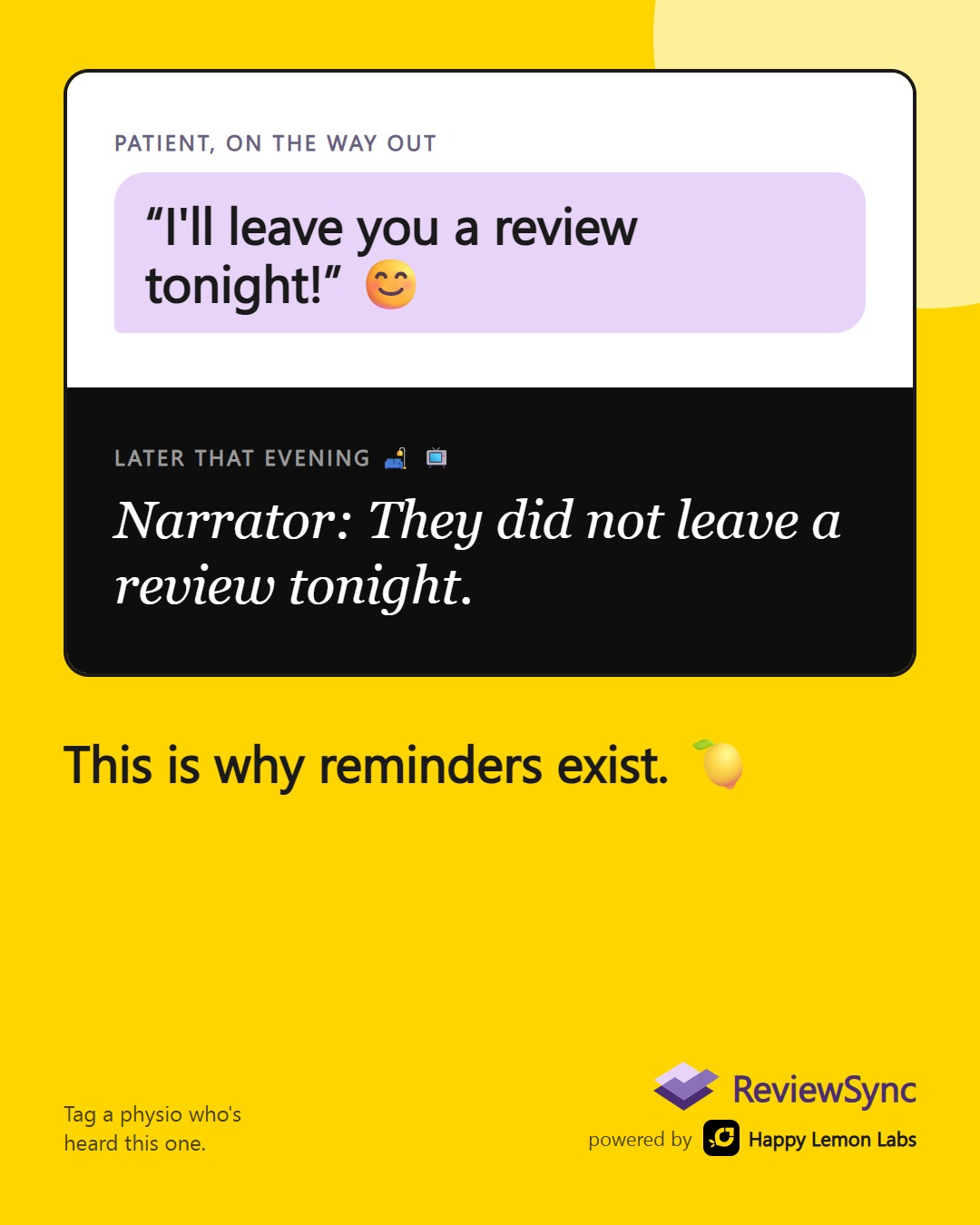
Happy customers don't review because nobody asks them to.
Even when asked, they forget unless the request comes at the right moment (immediately after a good experience).
The process feels like effort: signing in, finding your listing, writing something coherent.
A one-tap review link, sent within hours, turns intention into action.
ReviewSync handles the timing and the follow-up, so you don't have to remember.
Your happiest customers probably aren't leaving you Google reviews. This isn't because they're unhappy - it's because satisfaction alone isn't enough. They need to be asked, at the right time, in the easiest way possible.
The Two-Step Problem: They Forget, Then They Can't Be Bothered
When a customer has a great experience, their satisfaction is real but it's also complete. The job is done, they move on. Unlike a complaint, which creates an itch to be scratched or a need to warn others, good service just feels... normal. It doesn't trigger the motivation to review.
Even customers who think "I should leave them a review" forget within days. Life gets busy. The email reminder gets buried. And by the time they remember, the moment has passed and the barrier feels higher: they'd need to search for your Google Business profile, sign in to their account, navigate Google's interface, and write something that doesn't sound awkward.
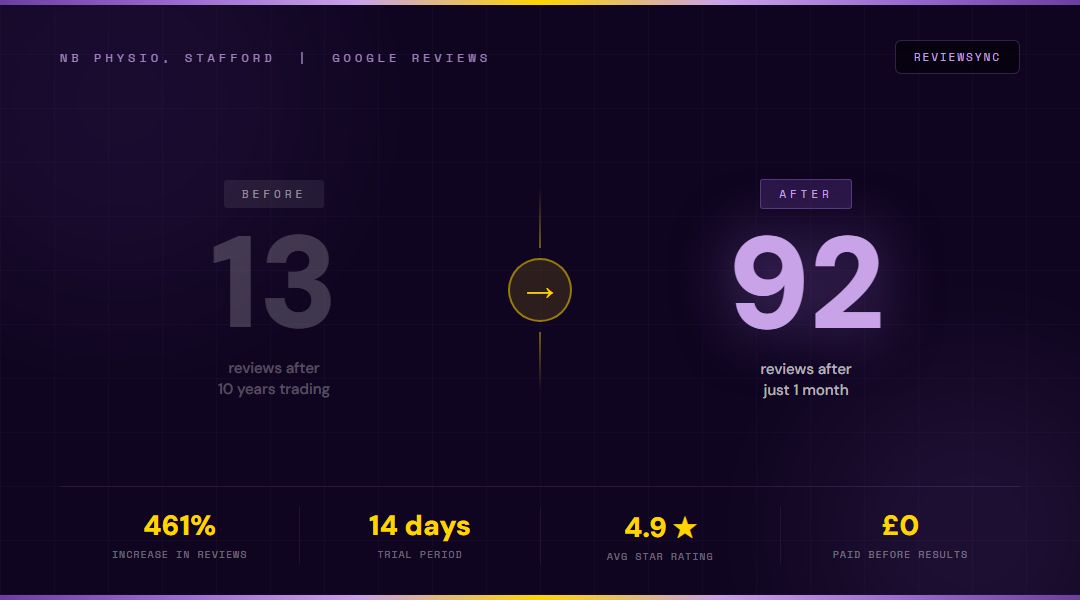
At NB Physio, a clinic in the North West, they had just 13 reviews after a decade. Those weren't unhappy customers—they were simply customers who never got asked at the moment it mattered.
How the Moment Matters
The difference between a review and no review often comes down to timing. When a customer walks out of a physio session feeling better, or receives a completed project, or sees a problem solved—that's the moment they're most likely to act. Within hours, the feeling fades. Within days, it's gone.
Recent reviews also matter more to new customers. A 2026 BrightLocal survey of US consumers found that 74% prefer (or only consider) reviews written within the past three months. Older reviews feel stale, even if the business is still the same.
So the ideal approach is simple: ask within hours of a good experience, make it a one-tap link so there's no friction, and ask every happy customer—not just the ones who seem most likely to comply.
What Changed at NB Physio
When NB Physio put this into practice, they went from 13 reviews in 10 years to 92 reviews in one month. Seventy-three of those came in the first 14 days. The rating stayed at 4.9.
The only things that changed: they asked every customer (not selectively); they asked immediately after treatment; and they made it one tap on a phone. No signing in. No searching. No thinking about what to write.
The same pattern repeats across any service business where happiness is the baseline. Clinics, surveyors, accountants, solicitors—happy customers review when asked, right then, one tap. The difference between 13 and 92 isn't about having happier customers. It's about asking.
The Practical Fix
You could build this yourself: a text message after each appointment, a unique link that pre-fills the review form, and a system to track who's been asked. It works, but it needs discipline and memory—sending that message within hours, every time, for weeks.
Or you use a tool built for it. ReviewSync asks every customer at the moment it matters, handles the follow-up for no-reviews, and keeps you from forgetting. The difference between 13 reviews and 92 isn't luck. It's asking.